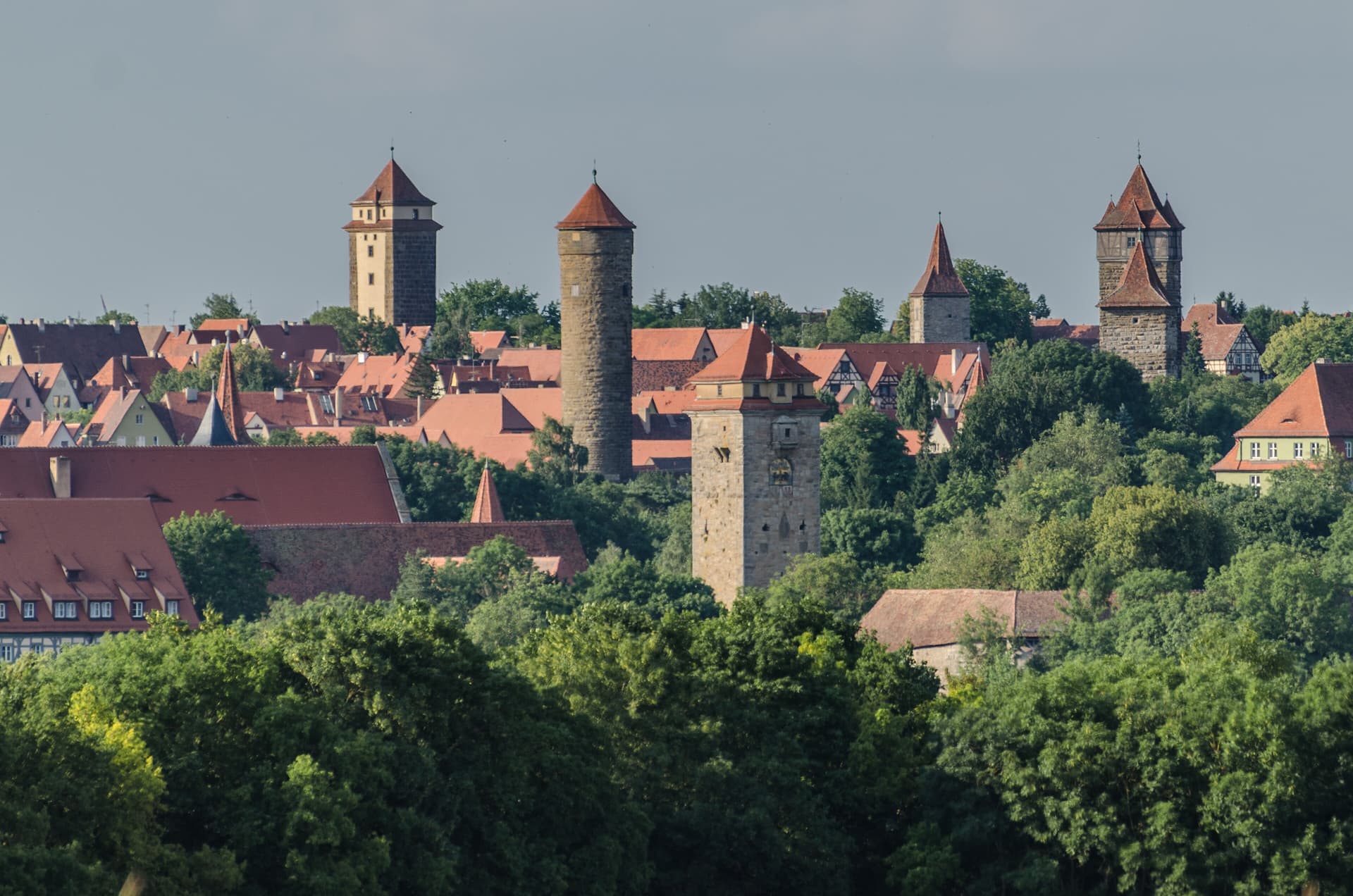
Rothenburg ob der Tauber is one of the most photographed towns in Europe and, for most visitors, a three-hour stop on a coach tour. This guide is about getting more from it: how to reach it, how long to give it, what it really costs and how to see it when the crowds have gone.
A little history
Rothenburg grew up beside a Hohenstaufen imperial castle on the spur above the Tauber. It became a Free Imperial City in 1274 — answerable only to the emperor — and reached its peak around 1400 under mayor Heinrich Toppler, when it controlled a sizeable territory. The Thirty Years’ War (1618–1648) left it occupied, plundered and impoverished, and it never recovered its wealth. That decline is exactly why it was never modernised.
In the 19th century Romantic painters rediscovered it, and strict preservation rules followed. On 31 March 1945 an air raid destroyed much of the eastern old town; the western part was spared when the town surrendered without a fight in April 1945. The damaged areas were carefully rebuilt, with help from donors all over the world.
How long do you need?
- Three hours — the Market Square, the Plönlein, a stretch of the walls and a Schneeball. What a day trip gives you.
- One full day — add the Town Hall tower, St. Jakob’s Church, the Crime Museum and the castle garden.
- One night — the version we recommend: the Night Watchman tour, the lanes at dusk and dawn, and a relaxed pace.
- Two or three nights — use Rothenburg as a base for Dinkelsbühl, Würzburg and the Romantic Road.
What to see
 Old town & walls
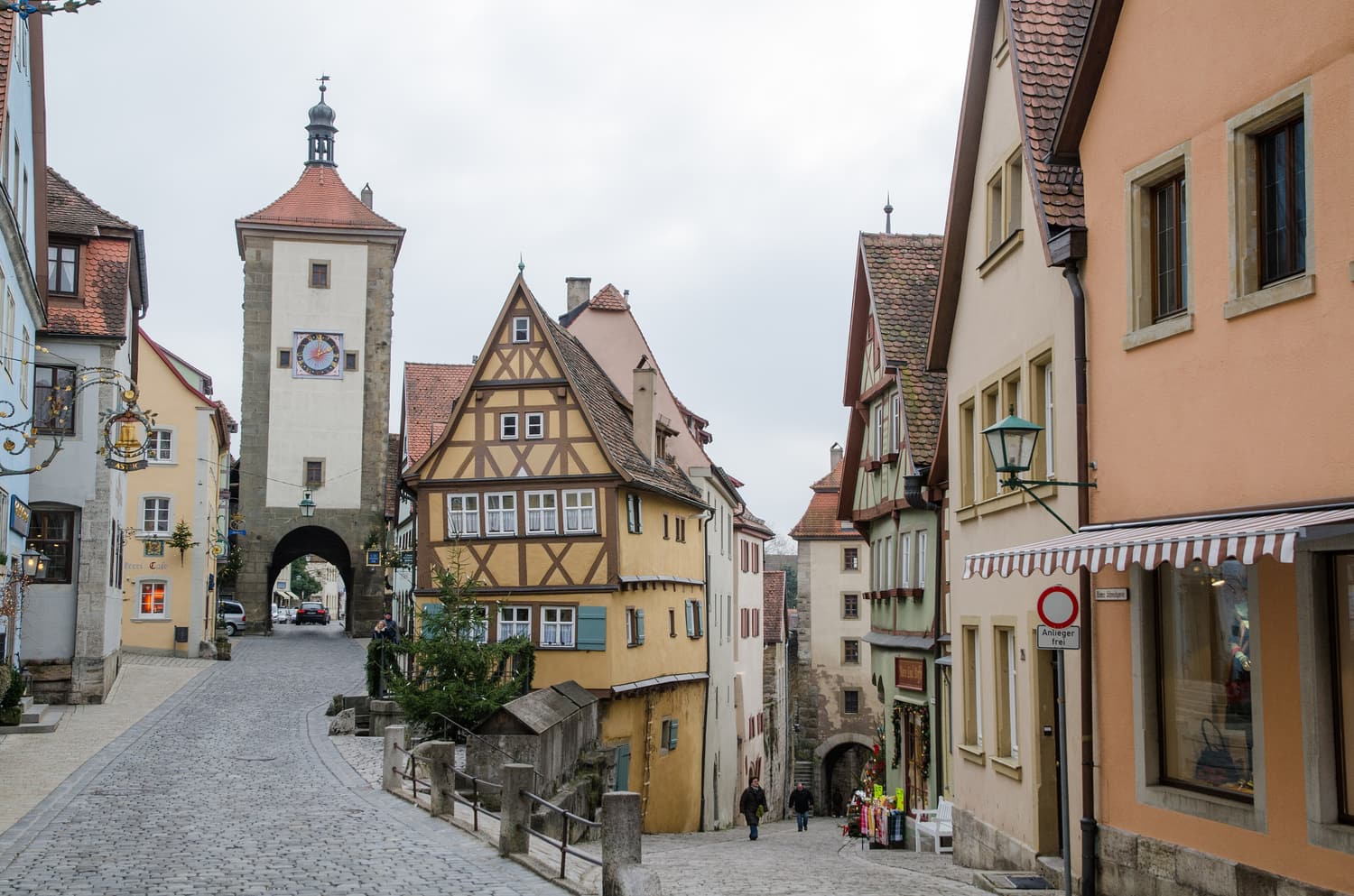
 Plönlein
The most photographed corner in Germany
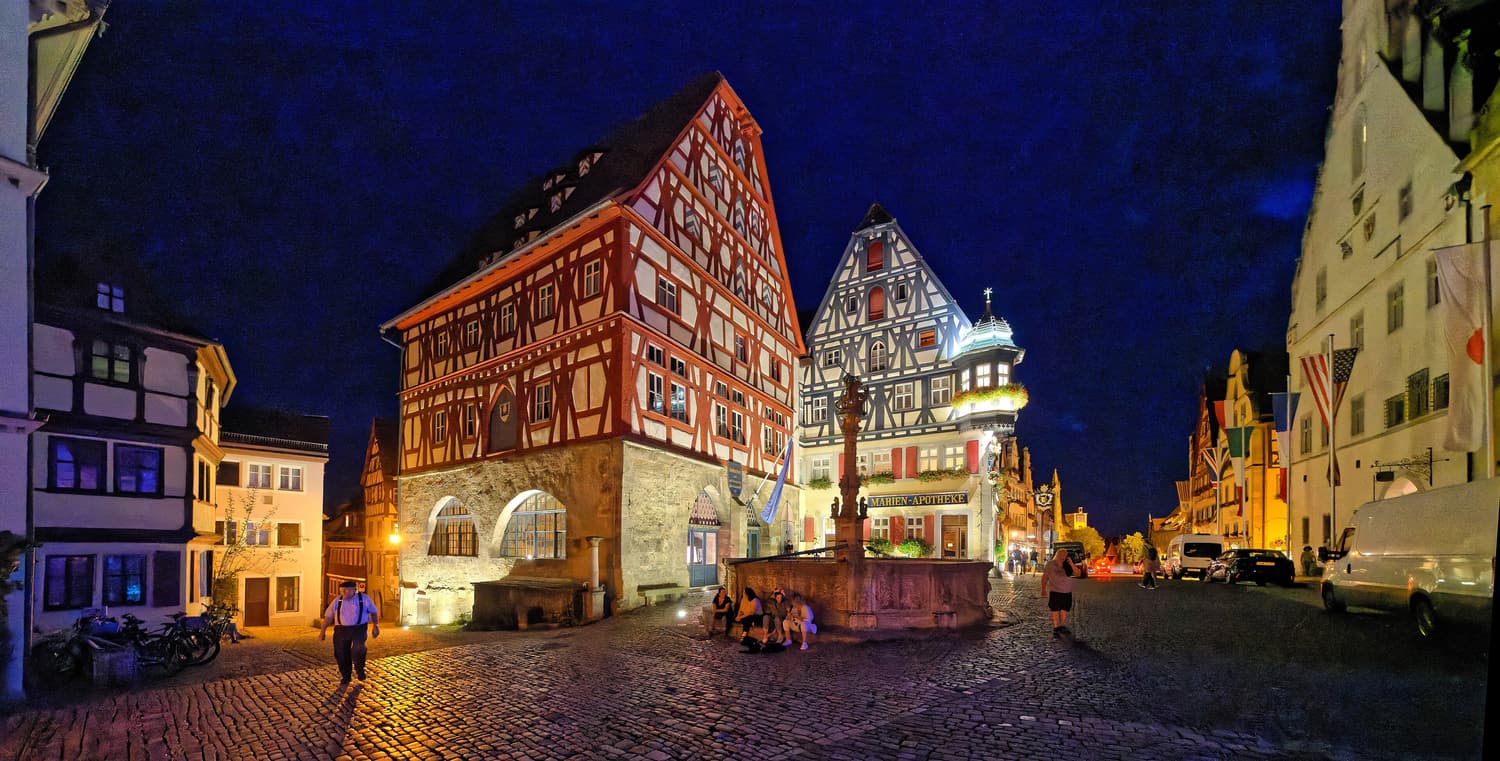
A tiny triangular square where the lane forks between two medieval towers, with a crooked yellow half-timbered house in the middle. It is the image on every Rothenburg postcard — and even better at dawn or after dark, when the crowds have gone.
 Old town & walls
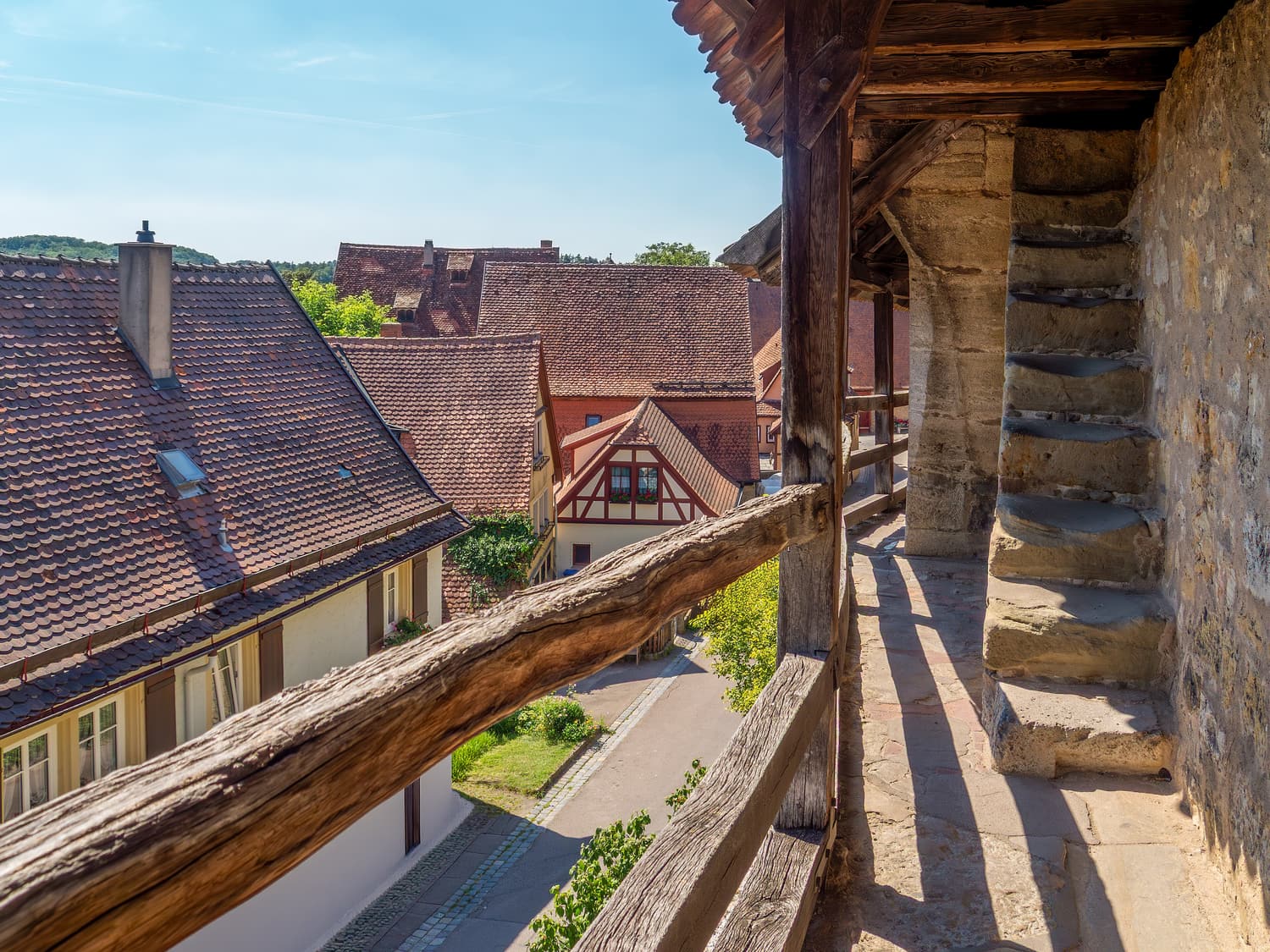
 Town Walls Walk
A free, roofed walkway round the old town
Rothenburg is one of the few towns in Germany where you can still walk long stretches of the medieval wall. The covered wall-walk runs for well over two kilometres from the Spital Gate to the Klingen Gate, looking down into gardens and over a sea of red roofs.
 Old town & walls
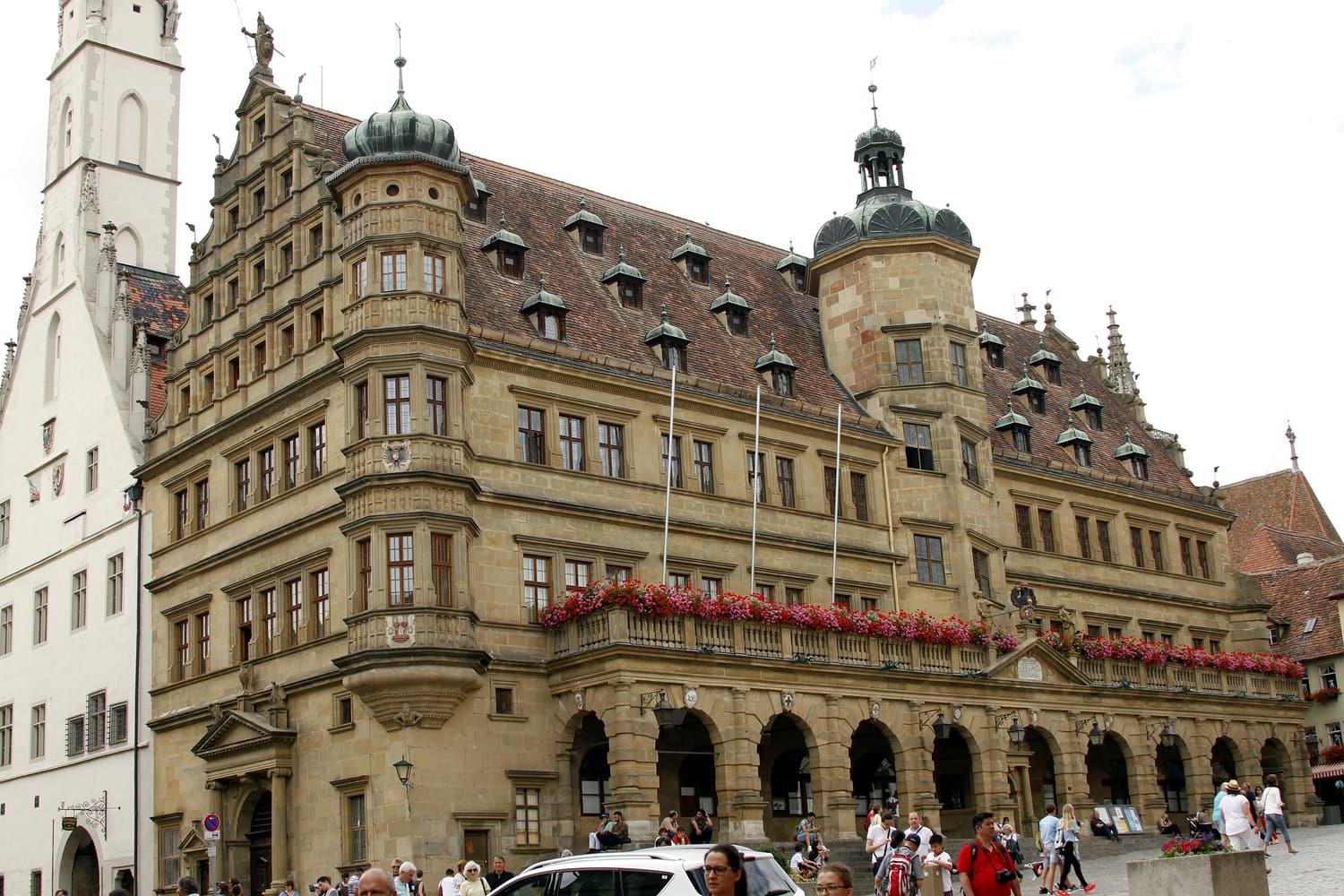
 Market Square & Town Hall Tower
The heart of the Free Imperial City
Rothenburg’s main square is framed by the Gothic and Renaissance Town Hall, the Councillors’ Tavern with its Master Draught clock and a ring of gabled houses. Climb the narrow stairs of the Town Hall tower for the finest view in Franconia.
 Museums & traditions
 Night Watchman Tour
Rothenburg’s most famous evening
Every evening in season a watchman with a halberd, a horn and a lantern gathers visitors on the Market Square and leads them through the darkened lanes, mixing history, gallows humour and stories of what life was really like behind the walls.
See all of them, with directions and tours, in our things to see guide.
What it costs
Rothenburg is not expensive by German standards, though hotel prices rise sharply in December. Typical prices (check current rates on the spot):
| Item | Typical price |
|---|---|
| Town walls walk, castle garden, Plönlein | Free |
| Town Hall tower | A few euros |
| Medieval Crime Museum | Around €8–10 |
| German Christmas Museum | A few euros |
| St. Jakob’s Church (outside services) | A few euros |
| Public Night Watchman tour | Around €10, pay at the end |
| Schneeball from a bakery | Around €2–5 depending on size |
| Main course in a Franconian inn | €14–25 |
| Double room inside the walls | From about €110 per night |
What to eat
The local speciality every visitor tries is the Schneeball (“snowball”): strips of shortcrust pastry gathered into a ball, deep-fried and dusted with icing sugar or coated in chocolate, nuts or cinnamon. Bakeries all over town sell them. They are crumbly, sweet and best shared — one is plenty for two.
For a proper meal, look for Franconian classics: Schäufele (roast pork shoulder with crackling and potato dumplings), Nürnberger or Fränkische Bratwurst with sauerkraut, Sauerbraten and seasonal dishes like asparagus in spring and venison in autumn. Wash it down with a dry Franconian Silvaner from the Tauber valley, served in the round Bocksbeutel bottle, or a local beer.
Where to stay
Staying the night is the single best upgrade to a Rothenburg trip. Options fall into two groups:
- Inside the walls — historic inns and townhouse hotels, often in 15th- and 16th-century buildings, a few minutes from the Market Square.
- Just outside — modern hotels near the Würzburg and Röder gates or the station, and spa hotels in the Tauber valley, with easier parking.
We compare the best of each, with live rates, on our where to stay page.
Events and festivals
- Meistertrunk festival (Whitsun/Pentecost): the historical play of the Master Draught, costumed parades and an encampment in the town.
- Reichsstadt-Festtage (early September): the Free Imperial City days, with the whole town in historical costume and fireworks over the walls.
- Reiterlesmarkt (late November to 23 December): one of Germany’s loveliest Christmas markets.
Practical details
- Money: euro. Cards are widely accepted, but some bakeries, cafés and the public Night Watchman tour prefer cash.
- Language: German; English is widely spoken in hotels, museums and shops, and Japanese and Chinese signage is common.
- Getting around: the old town is compact and entirely walkable. Cobbles and steep lanes make sturdy shoes essential.
- Safety: Rothenburg is very safe. Take normal care with bags in the crowds at the Market Square and the Christmas market.
- Sundays: many shops close on Sundays outside the Christmas season, but museums, restaurants and cafés stay open.
- Tourist information: on the Market Square, in the Ratstrinkstube building.
What to pack
- Comfortable, grippy shoes for cobbles and wall stairs.
- A light jacket even in summer — evenings in the lanes are cool.
- Warm layers, a hat and gloves for December; temperatures hover around freezing.
- An umbrella: rain is possible in any month.
- A small torch or phone light for the wall-walk after dark.
Common mistakes
- Arriving at 11:00 and leaving at 15:00 — the busiest, flattest hours of the day.
- Missing the walls. The wall-walk is free and the best way to escape the crowds.
- Buying a Schneeball each. Share one first; they are bigger than they look.
- Booking a December hotel too late. Rooms inside the walls go months ahead.
- Skipping the Night Watchman because you are on a day trip. See our tour comparison — or stay the night.